
Gundam SEED Meteor Unit Reissue: Try a Wooden Gundam Alternative
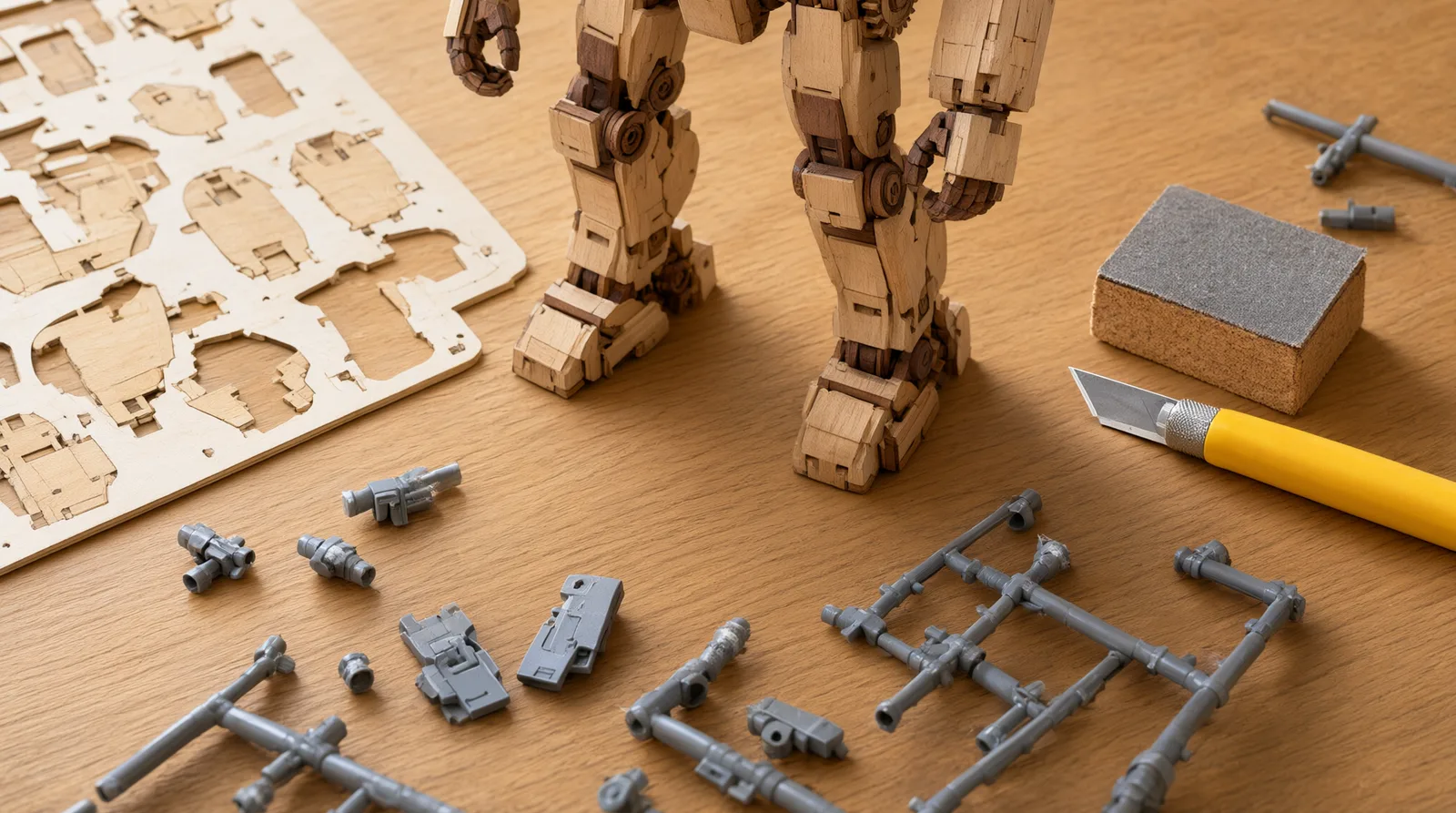
If you follow Premium Bandai releases, you already know the massive HG Meteor Unit from Gundam SEED is making a comeback in 2026. That kind of excitement around a huge, intricate plastic kit makes this the perfect time to consider a wooden gundam alternative — a build that ditches glue, paint, and plastic waste for a tactile, mechanical experience that looks incredible on display.
Whether you’ve got the Meteor Unit on preorder or you’re just looking for a fresh challenge that matches your love of engineering, Logicwoody’s wooden mechanical puzzles deliver screen-free satisfaction and moving parts that rival any mecha build.
Gundam SEED's HG Meteor Unit Reissue: What the Hype Is About
According to Essential Japan, the HG Meteor Unit returns for Premium Bandai Week 2026, reigniting the passion of Gundam SEED fans who remember its iconic debut. The unit is enormous by Gunpla standards, pairing with the Freedom and Justice Gundams to create a centerpiece-worthy display.
While the reissue is undeniably exciting, it’s still a plastic model kit. Most builders will need cement or snap-fit assembly, and to achieve the full anime-accurate look, you’ll invest hours in painting and panel lining. That plastic building ritual is beloved by many, but it also opens the door to a completely different medium — one that asks more of your hands and less of your paint booth.
Why Build a Wooden Gundam Alternative Instead
A wooden gundam alternative flips the script. Logicwoody’s kits are laser-cut from natural plywood, with no glue required — every part presses and locks together. The wood grain is visible from the moment you open the box, so there’s no need to paint. That alone saves hours of prep and dry time, while delivering a warm, organic finish that plastic can’t mimic.
The real draw is mechanical depth. Instead of assembling a static figure, you’re building interlocking gears, linkages, and moving mechanisms. For example, kits like the Wooden Cyber Hand Puzzle feature wearable finger joints, while the Wooden Space Rocket Shuttle kit has deployable stages. That kind of hands-on engineering feels closer to creating a functional machine than snapping a poseable robot together. For a deeper comparison, read our piece on wooden mechanical robot kits vs. plastic.
Durability matters, too. Plywood models don’t yellow or become brittle with age, and the natural finish hides dust better than glossy painted plastic. They make equally striking display pieces, whether you keep them solo or pair them with your Gunpla collection.
Top Wooden Mechanical Kits from Logicwoody for Gundam Fans
If you’re drawn to the space-faring scale of the Meteor Unit, start with the Wooden Space Rocket Shuttle Puzzle Exploration Kit. Its mechanical moving parts and multi-stage design scratch the same itch as building a large-scale mecha support craft, but entirely in wood.
For builders who want a robot-like assembly, the Wooden Cyber Hand Puzzle Mechanical Wearable Robot Model Kit is an engineering playground. Each joint and tendon operates through linked wooden components, giving you a wearable hand that moves when you do — a project that Gunpla builders with a taste for articulation will love.
Beyond these, the 3D Wooden Puzzles collection includes dozens of kits that challenge your mechanical intuition, from the marble-lifting gear trains of the Wooden Marble Run to the coin-operated excitement of the Wooden Slot Machine Puzzle. And if you want a non-vehicle, intricately detailed build, the Wooden Printing Machine Puzzle features movable type and rolling mechanisms that demand the same precision as a complex Gunpla kit — without a single drop of glue.
Building a Wooden Puzzle Kit: Tools, Time, and Techniques
Unlike plastic Gunpla, wooden puzzles ask for only a few basic tools. A fine-grit sanding stick smooths joint edges, and a craft knife or side cutter helps twist parts off their wooden sprues. Many builders also use a small amount of beeswax on gears to keep motion buttery. You won’t need nippers, cement, or an airbrush.
Assembly is a methodical process where you press pegs into holes — think snap-fit but with wood tolerances. Parts are precision-cut, so alignment is key; rushing risks snapping a delicate tab. Plan to spend a few quiet evenings building, and optionally add a minuscule drop of wood glue for permanent joints if you’re building for display rather than occasional movement. For a full lighting and workspace guide, see our wooden model desk setup tips.
Displaying Your Wooden Model Next to Gunpla
A finished wooden mechanical puzzle has a natural, sculptural presence that stands out next to painted plastic Gunpla. The warm wood tones and visible grain create a mixed-media shelf that feels curated rather than cluttered. Guests who’ve never touched a wood kit will almost always ask how it moves, and that interactive demo — cranking a gear or unfolding a rocket stage — turns a static display into conversation piece.
Set your wooden model on a simple base or riser to match the height of your 1/144 or 1/100 kits. Because there’s no paint to chip, you can handle these models repeatedly to show off the mechanics. Whether you decide to post a photo of your combined collection or just enjoy the contrast from your chair, a wooden gundam alternative belongs right alongside your favorite mobile suits.
Ready to take a break from plastic runners and painting? Explore the full range of 3D wooden puzzles at Logicwoody and find your next hands-on build.
Frequently asked questions
Do I need glue or paint for wooden mechanical puzzles?
No, they are designed to lock together without glue. Painting is unnecessary because the natural wood grain already looks finished, but you can seal the surface with clear wax if you like.
How difficult are wooden puzzles compared to Gunpla?
They require a similar level of patience and dexterity, but no special modeling skills. The focus is on careful pressing and alignment rather than cutting, gluing, or painting.
Will a wooden model fit on my Gundam shelf?
Yes. Most kits are comparable in size to a 1/100 MG Gundam or larger, and the natural wood finish creates a beautiful contrast next to painted plastic.
Do the moving parts hold up over time?
Absolutely. Wood mechanisms that use beeswax stay smooth for years, and unlike plastic joints, they don’t become floppy or brittle with age.
What tools do I need to start?
Just fine-grit sandpaper, a craft knife for sprue removal, and optionally beeswax for gears — no glue, nippers, or paint required.