
Classic Car Wooden Model Kit: Warmth & Display Over Plastic
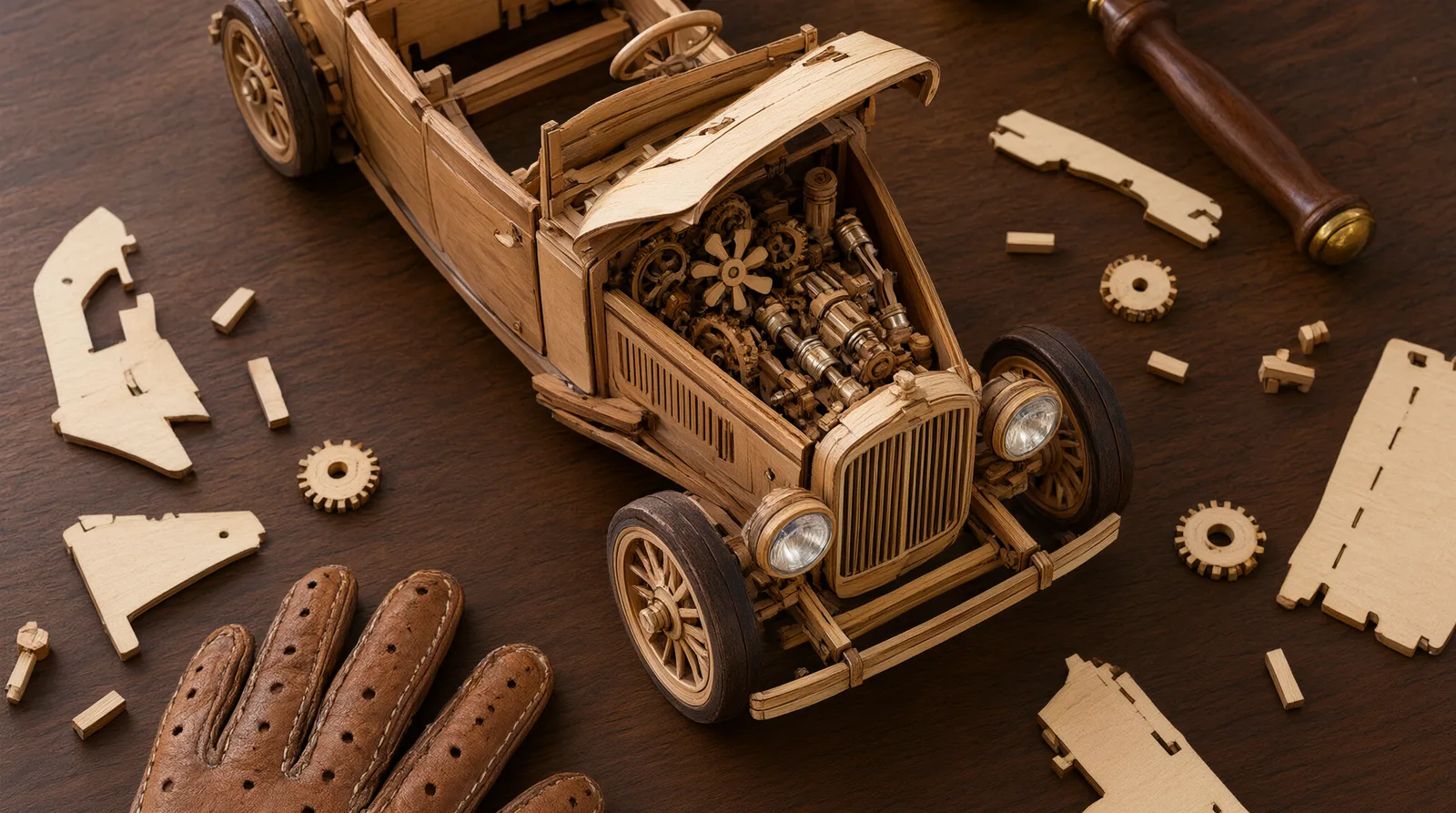
If your idea of a relaxing afternoon involves the scent of aged leather, the hum of a well-tuned engine, and a piece of automotive history taking shape in your hands, a classic car wooden model kit might just be the missing piece in your garage. Plastic kits have long dominated the hobby bench, but a growing number of enthusiasts are reaching for laser-cut plywood to build something that feels as timeless as the cars themselves. The swap isn’t about nostalgia alone—it’s about trading cold, glossy shells for the warmth, grain, and display elegance of natural wood.
Why Classic Car Fans Are Switching to Wood
Standard injection-molded plastic car kits deliver high shine and precise decals, but they rarely capture the tactile soul of a vintage automobile. A wooden model replaces that slick, painted surface with the matte depth of birch or basswood ply, echoing the patina of an original dashboard or the plank floors of a pre-war workshop. A quick scroll through the recent Fuhrmann-Motor classic car model kit gallery on Zwischengas confirms the appetite for iconic automotive shapes hasn’t dimmed—but instead of yet another static plastic shell, wood offers a fresh material choice for that same nostalgia.
Beyond looks, the build process itself gets a welcome upgrade. Our tool-free kits eliminate the solvent smells of glue and the mess of paint. Pieces slot together with a satisfying friction fit, turning assembly into a clean, focused session you can do at the kitchen table without clearing the room. It’s a meditative, screen-free way to engage with classic car design—every interlocking joint a quiet nod to the craftsmanship era you admire.
The Display Advantage of a Classic Car Wooden Model Kit: Wood as Decor, Not Just a Toy
Leave a bright orange plastic coupe on your mantel and it screams “hobbyist.” Replace it with a bare-wood classic car, and suddenly you have architectural sculpture. Laser-cut plywood’s warm, organic texture complements mid-century modern living rooms, rustic office shelves, and industrial loft spaces alike. It reads as intentional decor—no more tucking models away when guests arrive.
To lean into that gallery feel, try grouping your finished build with other natural-material objects. A row of leather-bound books, a potted snake plant, and a brass desk lamp turn a single wooden vehicle into a curated vignette. For heavy-subject examples that work brilliantly as standalone sculpture, look to the store’s Wooden Ferdinand puzzle or the Wooden Belarus 82.3 tractor kit. Kept in bare wood, their chunky fenders and articulated implements carry the weight of industrial sculpture rather than a toy.
Locating the Classic Lines in a Wooden Puzzle Kit
A wooden model rarely comes with chrome badges or specific marque emblems. Instead, it asks you to read the silhouette: long hood proportions, rounded fenders, split windshields, and running boards. Those design cues are the true language of classic cars, and a well-designed puzzle preserves them in simplified, elegant form. You’re not building a replica of one particular vehicle; you’re building a tribute to an entire era of automotive design.
This approach shifts your focus from decal-precision to form language and craftsmanship. Much like our Sovereign of the Seas ship puzzle captures a golden-age sailing vessel’s spirit without a single printed flag, a wooden automotive subject distills a car’s essence into pure line and structure. The result rewards a slower kind of looking—one that gains depth the longer it sits on your desk.
Build Experience: Mechanical Motion Over Static Shells
A plastic kit typically ends with a glued, motionless body. With a wooden mechanical puzzle, motion becomes the star. Meshing wooden gears, steering linkages, and rotating wheels give your hands a tactile reward that’s completely absent from static assembly. As you slot together moving parts, you’ll intuitively learn about load paths, gear ratios, and structural bracing—in a way that feels more like restoring a vintage mechanism than assembling a model.
That engineering current runs through the entire Logicwoody lineup. From the articulated finger joints of the Wooden Cyber Hand puzzle to the chain-driven sequences in our marble run kits, moving wooden mechanics are the house style. A classic car subject fits right in: imagine a steering wheel that actually turns the front wheels, or a crankshaft that pistons pump up and down. The build is the reward, and the motion is what makes you want to pick it up again and again.
Choosing a Palette That Honors the Vintage Garage
You might feel the pull to reach for paint, but try holding back. Keeping the model unpainted—or applying nothing more than a light walnut stain or a beeswax finish—preserves the wood’s visibility while deepening its retro warmth. That honey-brown glow recalls the wooden steering wheels and tool chests of a 1950s repair shop, and it ages gracefully with time.
Avoid glossy clear coats; they reflect light harshly and attract dust that shows up in photos. A low-sheen surface, on the other hand, photographs beautifully in window light and hides everyday dust, making your piece truly maintenance-friendly. The store’s Wooden Retro Telephone puzzle already demonstrates this lesson: its bare wood and subtle brown tones evoke the rotary era far more honestly than any painted replica could.
From Shelf to Story: Sharing Your Build in a Collector Community
A wooden classic car model doesn’t just sit there—it tells a story. When you share it online, try staging the shot against a backdrop of leather-bound books, a wool throw, or beside a vintage watch. That composition connects the build to a broader analog world, drawing in fellow enthusiasts who appreciate the warmth of materials as much as the automotive subject.
Post progress pictures that highlight the wood joinery itself. A macro shot of a clean dovetail-style joint or a gear train mid-assembly sets your work apart from the endless streams of painted plastic kits. It attracts wood-and-auto admirers, and it signals that you’re building with a curatorial eye. Ready to explore that approach further? Browse the full 3D Wooden Puzzles collection to discover more mechanical heritage subjects—from the Wooden Tractor Unit and Container Chassis Set to the Wooden FS80 Forage Harvester—that bring the same warm, moving engineering to your shelf.
Your next classic car build deserves a medium as timeless as the design it celebrates. Ditch the fumes, the glue, and the plastic shine, and let bare wood do the talking.
Frequently asked questions
Do classic car wooden model kits need glue or paint?
No. Our wooden model kits use precisely laser-cut pieces that press-fit together without glue. Paint is entirely optional; the natural wood grain is meant to be the main visual feature. You can add a light stain or beeswax for protection, but nothing sticky is required.
How do I clean or dust a wooden puzzle model?
Dust gently with a soft, dry microfiber cloth or a camera lens brush. Because the models have an open, mechanical structure, you can reach most surfaces easily. Avoid water or household cleaners, which can raise the wood grain. A low-sheen finish also helps hide light dust between cleanings.
Can I personalize my wooden classic car model with stain or finish?
Absolutely. A light application of wood stain, beeswax, or even a tea soak can give your model a richer, aged tone while keeping the wood grain visible. Test any finish on an inner surface first to see how the ply absorbs it, and always avoid thick, glossy coats that obscure the natural texture.
Are wooden classic car model kits suitable for beginners?
Yes. Most kits are designed for ages 14 and up, and the interlocking construction removes the complexity of glue and paint. Beginners with patience will find the assembly intuitive, especially with the numbered part system and clear pictorial instructions. It’s a great project for anyone who enjoys puzzles or hands-on crafts.
Do wooden models hold up over time compared to plastic kits?
When kept indoors and away from excessive humidity, a well-built wooden model can last for decades. The plywood is stable and won’t warp like solid wood. Unlike plastic, wood won’t become brittle or yellow over time, and minor wear simply adds to the vintage character.