
Wooden Mechanical Puzzles vs Plastic Models: Which Build Satisfies?
For hobbyists weighing wooden mechanical puzzles vs plastic models, the recently revealed LEGO Build, Paint and Play set offers an intriguing middle ground. It introduces hands-on painting to the plastic brick world—a hint that builders crave more personal touch in their projects, even from snap-together kits.
Yet the core experience of assembling a model diverges dramatically when you move from standardized plastic bricks to the interlocking plywood of a mechanical puzzle. This article unpacks those differences—from the tactile assembly process to the final display—so you can choose the build that truly satisfies your mood and your shelves.
Why the LEGO Build, Paint and Play Set Caught Our Eye
In late October 2026, Jay's Brick Blog and The Brick Fan covered the announcement of LEGO 40889 Build, Paint and Play, a gift-with-purchase that lets you construct and then paint a custom minifigure model. It’s a clear sign that even the plastic model giant sees value in slowing builders down and giving them a hand in the finish work—something wooden puzzle enthusiasts have enjoyed for years.
While the LEGO GWP adds a splash of creativity, the assembly itself stays true to the instant-gratification formula: stud-and-tube connections that click into place quickly, with little resistance and no need for tools. The painting happens after the build, not during. That’s a fundamentally different rhythm from what you get with a wooden mechanical puzzle, where the assembly is a methodical, gear-checking process that feels more like building a tiny machine than snapping together a toy.
Wooden Mechanical Puzzles vs Plastic Models: The Build Experience
Plastic brick kits rely on a uniform friction fit—studs latch into tubes with a predictable, forgiving pop. The instructions are linear, and you can often complete a standard set in under an hour. Mistakes are easily corrected by pulling pieces apart, and the final model is static unless you add separate motorized elements. It’s a fast, low-friction path from unboxing to display.
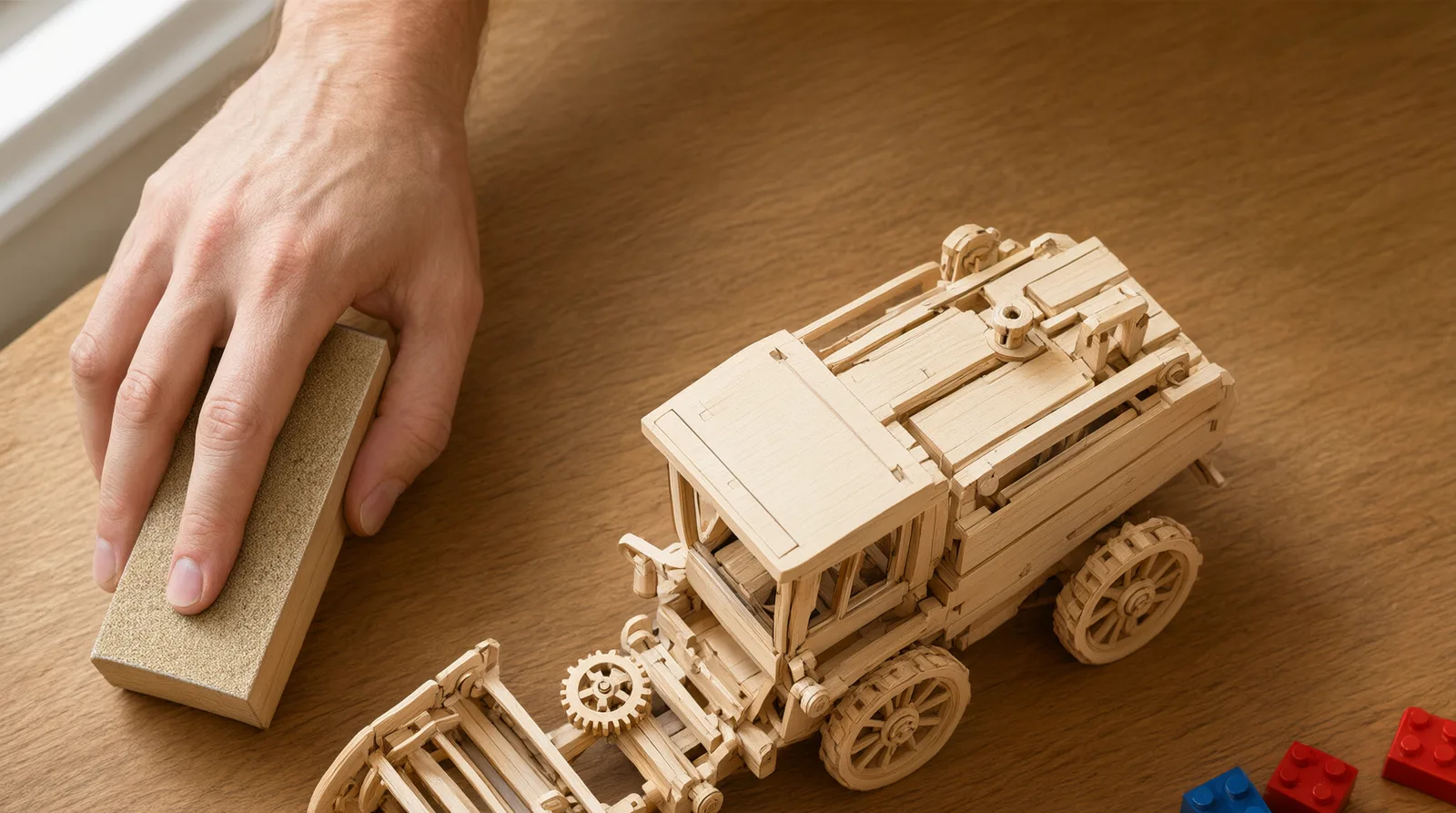
Wooden mechanical puzzles, by contrast, are a study in alignment and mechanical logic. You work with precisely cut plywood pieces that slot together using interlocking tabs, pins, and sometimes small wooden gears. No glue is required, but every joint must align cleanly—you might need to gently sand a tight tab or wax a moving axle. When you turn a hand crank and the intricate transmission of a Wooden FS80 Forage Harvester with JKS 4.5 Header whirs to life, that moment is earned through patience and problem-solving. The reward isn’t just a finished object; it’s the working mechanism itself.
This process engages you deeply. You’ll test gear meshes, trace how a rotating shaft transfers motion to a propeller or a loading auger, and you’ll feel a genuine sense of accomplishment when everything moves. It’s not a build you finish in one sitting—and that’s exactly the point.
Touch and Texture: Why Wood Changes the Process
Pick up a plastic brick and you feel a smooth, uniform surface. Pick up a piece from a wooden puzzle and you encounter warmth, subtle grain patterns, and the faint scent of natural plywood. That tactile difference shapes the entire build experience.
Many wooden kits invite you to sand rough edges, apply a bit of beeswax, or oil the moving parts. These small, meditative steps turn the build into a sensory ritual. The soft, woody click of a properly seated tab is worlds away from the bright snap of plastic on plastic. There’s a quiet satisfaction in hearing that perfect fit, and it’s one of the reasons builders say wooden puzzles make for the ideal screen-free evening project. Where a plastic kit may be a quick puzzle fix, a wooden mechanical model becomes a multi-evening unwind.
From Assembly to Display: Painting vs. Stickers
The new LEGO GWP puts paint in your hands, but for the most part, plastic models lean on pre-colored pieces and sticker sheets for decoration. Stickers can peel, fade, or feel irreversibly childish. Wooden mechanical puzzles have always been open to personalization, with a surface that drinks in stains, acrylics, or even a simple clear coat.
Because the wood grain shows through, a painted tractor or ship develops a unique character over time, much like a cherished piece of furniture. You can leave the natural birch tones untouched for a warm, organic look that blends effortlessly into a desk or bookshelf. As we explored in our post on Classic Car Wooden Model Kit: Warmth & Display Over Plastic, wood finishes age gracefully, turning a model into mature decor rather than a toy-like display. When you choose a wooden puzzle, you’re not just building—you’re crafting an heirloom piece that reflects your own hands.
Which Project Fits Your Mood? A Quick Guide
So how do you choose? Both types of building have their place, and it often comes down to what kind of satisfaction you’re seeking in the moment.
- Reach for plastic bricks when you want a fast, low-stakes creative break—maybe with kids, or when you need a quick win without any tools or finishing steps. The result is cheerful and immediate.
- Choose a wooden mechanical puzzle when you crave a focused, screen-free afternoon that rewards patience. The assembly is the main event, and the moving model becomes a lasting conversation piece. Farm machinery kits, like the Wooden Tractor Unit and Container Chassis Set or the aforementioned FS80 Forage Harvester, highlight real-world mechanics with linkages, steering, and rotating elements that demonstrate clever engineering without a single drop of glue.
No matter which direction you lean, the key is to match the build to your mood. When you’re ready to slow down and engage your hands and mind with something that moves, the right wooden puzzle is waiting. Browse our full 3D Wooden Puzzles collection to discover your next hands-on challenge.
Frequently asked questions
Do I need to sand parts when building a wooden mechanical puzzle?
Because wood is a natural material with slight variations, a joint may occasionally be too tight. Gently sanding the tab or the slot with fine-grit sandpaper is a normal part of the process and ensures a smooth, working fit without glue.
Is glue required for wooden mechanical puzzles?
Absolutely not. The interlocking tabs and pins have been designed to hold securely without adhesives. In fact, not using glue allows you to carefully disassemble and rebuild the model if desired, and it ensures moving parts can function freely.
How long does a wooden mechanical puzzle take to build compared to a plastic kit?
A typical wooden puzzle marathon takes several hours spread over multiple sessions, compared to the sub-hour build time of many plastic brick kits. The slower pace is intentional—it’s about enjoying a meditative, engineering-like challenge at your own rhythm.
Can I paint or customize a wooden model puzzle?
Most wooden models come in natural birch plywood tones, but the wood surface is ideal for customization. You can apply wood stains, acrylic paints, or clear waxes. The grain will still show through, giving your model a unique, mature finish that plastic bricks often lack.
What kind of moving parts do wooden mechanical puzzles have?
Moving parts could include spinning propellers, working transmissions, steering linkages, and gear trains that actually turn a crank. This mechanical action—absent from static snap-together kits—is the core reward of the build and turns the model into a functional display piece.