
Wooden Mechanical Robot Kits: Hands-On Engineering Over Plastic
The mecha world is buzzing. TAKARA TOMY recently teased the T-SPARK Dandivine series, a line of combining robots that has collectors and builders eagerly watching for the next big transformation trend (source). While the hype centers on snapping plastic parts together to form larger bots, many enthusiasts are asking a deeper question: what if you could build the moving mechanics that make a robot come alive, not just its shell? A wooden mechanical robot kit invites you to do exactly that — assembling every gear, linkage, and joint from precision-cut wood, and in the process, gaining a real understanding of how robots function.
As anime mecha trends continue reshaping the model kit landscape, wooden puzzle builders are discovering a more tactile, educational approach to mechanized models. This is more than a hobby shift; it's a gateway to hands-on engineering that plastic kits rarely offer.
The New Combining Robot Hype — What's Fueling It?
The T-SPARK Dandivine tease has sparked visions of intricate, multi-mode robots that merge into a larger form — a concept that has long captivated mecha fans. This wave of combining enthusiasm echoes how anime mecha model trends have already sparked a new wave of wooden puzzle building, where builders seek out kits that move and transform through their own assembled mechanics. Instead of just clipping pre-molded parts, you're suddenly wondering how the internal linkages and pivot points would work if you built them yourself. That curiosity opens the door to a very different kind of model kit.
Why a Wooden Mechanical Robot Kit Feels Different
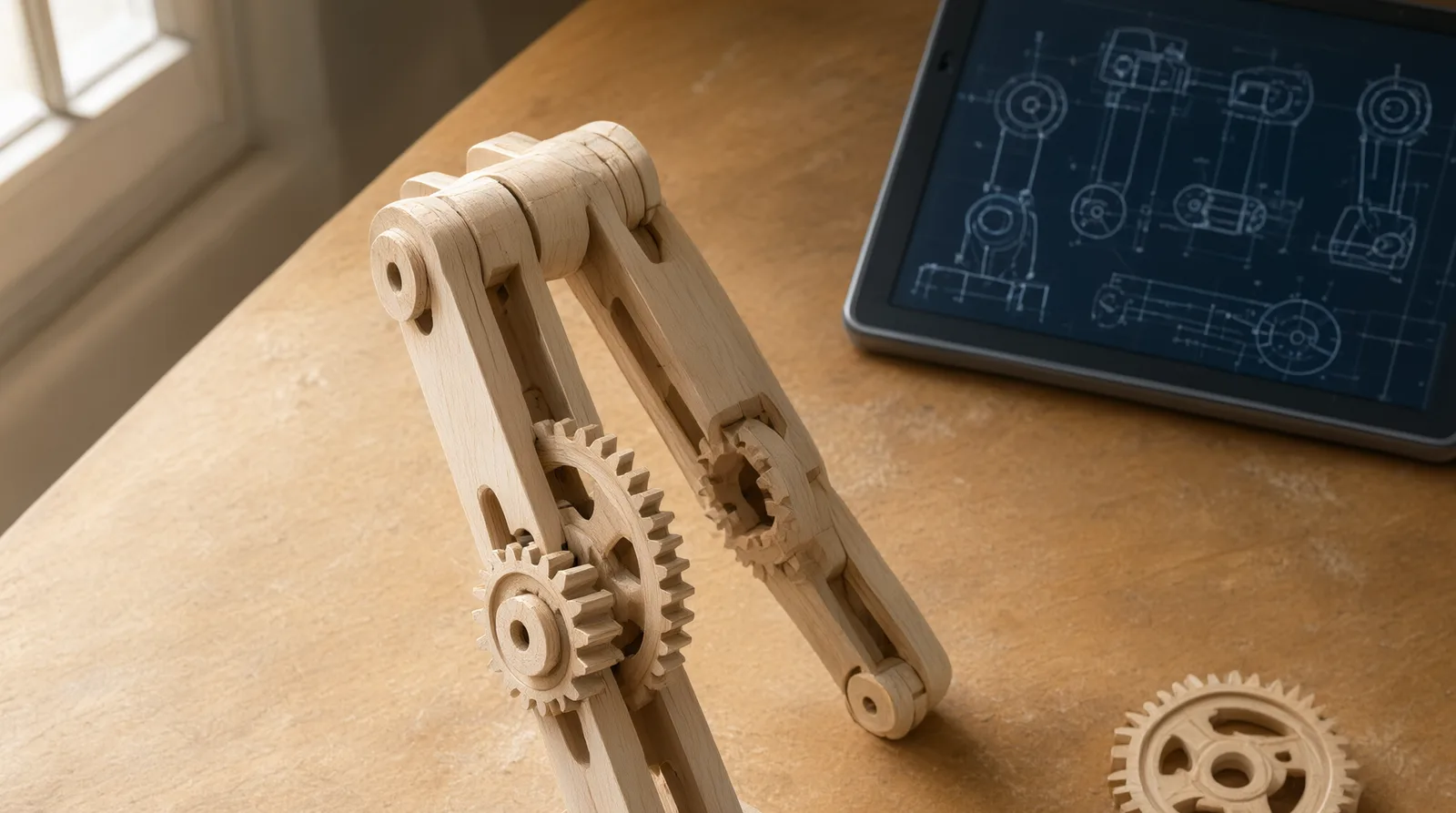
Pick up a wooden mechanical robot kit, and the first thing you notice is the material itself — warm, natural grain, a subtle texture that no injection-molded plastic can replicate. The build experience shifts from passive snap-together to active assembly: interlocking wood pieces, pegs, and wooden axles show you exactly how movement transmits through a mechanism. Most kits require no glue, so you can disassemble, adjust, and tinker without fear of breaking anything. A wearable wooden robot hand, for example, lets you see how each finger linkage translates your own motion, without hiding behind plastic shells. Every gear train and joint becomes a transparent lesson in mechanical engineering.
Real Engineering Lessons Inside Every Wooden Gear
When you build a wooden robot, you're not just following instructions — you're learning gear ratios, torque transfer, and the importance of precise alignment. Wooden parts occasionally need a light sanding or gentle adjustment, turning a simple assembly into a problem-solving challenge. When a joint sticks or a gear train binds, you diagnose the issue, learn why it happened, and fix it yourself. That process builds a sense of ownership and insight that a pre-colored snap kit rarely provides, giving you skills that echo real-world engineering thinking. By the time your robot moves smoothly on your desk, you've internalized concepts that stay with you long after the build.
Customization, Finishing, and Display That Stand Out
Wood readily accepts stain, paint, or a clear finish, so your robot can take on any personality you choose — far beyond the fixed color schemes of typical plastic models. A well-finished wooden robot becomes a conversation piece, blending art and mechanics in a way that complements both modern and classic décor. Many builders prefer to leave the wood natural, applying a light oil to highlight the grain and warmth. The result is a display that showcases not just a robot, but your craftsmanship and the raw beauty of the material itself.
Choosing Your First Wooden Mechanical Robot Kit
No prior woodworking experience is needed; these kits are precision laser-cut for accurate assembly. Start with a model that features clear mechanical movement — like a robotic hand, walking legs, or a rotating turret — so you can watch engineering in action. While not all wooden kits combine like the Dandivine, their modular construction invites you to explore how separate mechanisms can connect, perhaps even inspiring your own custom robot designs. Browse our 3D Wooden Puzzles collection to find robot-themed kits that move beyond static display and let you build the mechanics yourself.
Ready to experience the mechanics yourself? Explore the collection and find a wooden robot kit that turns engineering curiosity into a hands-on build you'll be proud to display.
Frequently asked questions
Do I need woodworking skills for a wooden mechanical robot kit?
No woodworking experience is needed. The kits feature precision laser-cut pieces that fit together with accurate joints and pegs. All you need is patience and the ability to follow illustrated instructions. Some builders enjoy light sanding for a smoother fit, but it's optional.
How does a wooden robot kit teach engineering principles?
Absolutely. Assembly requires careful alignment of gears, axles, and linkages. If something binds or doesn't move smoothly, you'll learn to check gear meshing and adjust part fit. This process builds a deep understanding of mechanics that pre-assembled or snap-fit plastic kits rarely provide.
Can I customize a wooden mechanical robot kit?
Yes. Since most kits require no glue, you can disassemble and reassemble freely for customizing or repairs. Wood also accepts stain, paint, and clear finishes, giving you complete control over the final look and feel of your robot.
Are wooden robot kits suitable for children?
Many kits are designed for adults and older teens due to small parts and mechanical complexity. However, with supervision, younger builders can learn a lot. Always check the age recommendation on the specific kit to ensure it matches the builder's skill level.
What tools do I need?
Typically, no extra tools are required beyond what's included. Kits come with all wooden pieces, pegs, and sometimes sandpaper. You might want a craft knife for cleanup, but most parts pop out cleanly without cutting.