
Wooden Robot Model Kits vs Plastic: Why the Build Feels Better in Wood
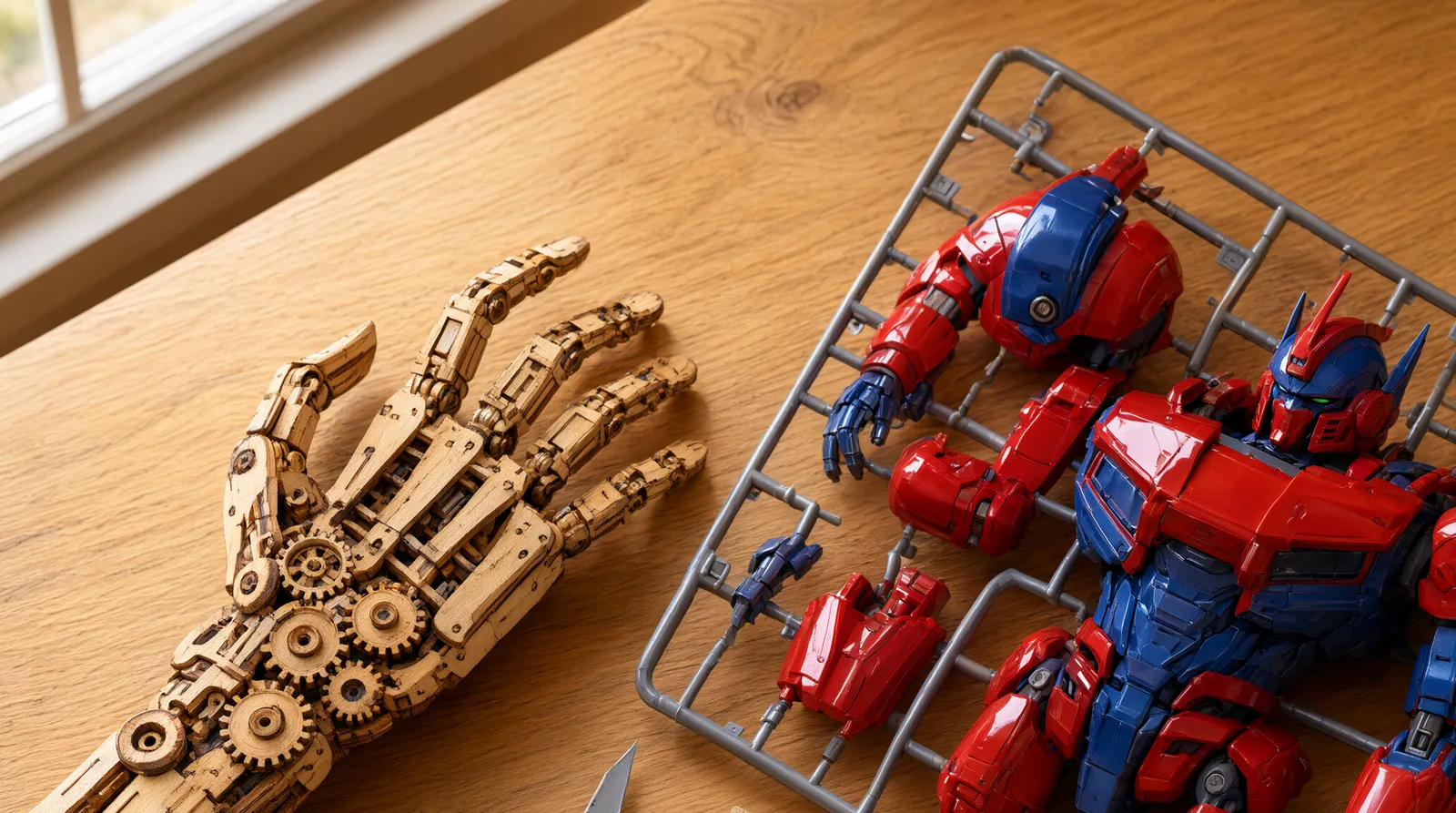
When the Transformers Optimus Prime Ver.EVO Action Edition 07 model kit preorder hit the community (spotted via Tformers), the instant reaction was predictable: crisp snap‑fit plastic, articulated joints, and that unmistakable truck‑to‑robot transformation. But if you’re weighing a wooden robot model comparison, the latest plastic mecha release might not be the only build that rewards your hands — and your patience — in a lasting way. It’s worth asking: with such engineered plastic precision within reach, why would anyone spend a weekend coaxing gears out of plywood sheets?
The answer lives in the assembly experience itself. Wooden mechanical models, like the ones crafted by Logicwoody, trade sprue cutters and stickers for interlocking wooden parts that need no glue. They turn you from a kit “assembler” into a maker who feels every tooth mesh and every axle slide home. This isn’t about replacing plastic; it’s about discovering a completely different kind of build satisfaction.
The Assembly Experience: Snap-Tight vs Gear-by-Gear — A Wooden Robot Model Comparison
Building a typical plastic robot kit follows a familiar rhythm. You free parts from a sprue tree, snap them together following numbered sequences, maybe apply foil stickers or waterslide decals. The final figure stands ready to pose, and for many fans, that 90‑minute session is pure joy. But the process leans heavily on passive assembly: parts click into their destined places, often requiring little more than careful pressure.
A wooden robot model turns the tempo inward. You slide a laser‑cut plywood sheet from its frame, gently press out delicate gear blanks, and reach for the miniature file to smooth a burr. Every small cog and linkage is something you fit, test, and adjust. Models like the Wooden Printing Machine Puzzle demonstrate how a fully mechanical gear train comes alive only after you’ve seated each axle. There’s no hiding a mistake behind a plastic shell — and that’s precisely the point. The tactile feedback of a wooden gear beginning to rotate with a slight woody resistance teaches patience and mechanical intuition in a way no snap‑tight kit can duplicate.
Material Sensory Difference: Why Your Fingers Care
Run your thumb over a fresh‑from‑the‑sheet wooden robot limb, and you feel a warm, lightweight surface that’s ready to be customized. You can leave it raw for an honest workshop look, wax it for a silky patina, or even apply a light stain to match your desk. The material responds to you. Plastic, for all its crisp consistency, rarely invites that kind of personal touch — the surface is already final, sealed in its injection‑mold sheen.
And then there are the less obvious sensory layers. The faint scent of birch plywood that rises as you sand a tight joint; the subtle grain variation that makes every kit subtly unique; the absence of chemical adhesives or paint fumes. A wooden robot model can be fully assembled with nothing more than a small file and your own hands, which keeps the project accessible and mess‑free. For grown‑ups who remember the joy of woodshop class, that tactile, aromatic experience is irreplaceable.
From Cyber Hands to Mecha: What Wooden Robot Kits Actually Build
Wooden robot models are not static sculptures you place on a shelf and forget. Many are fully articulated, wearable, or driven by exposed gear trains that you activate with a crank or lever. The 3D Wooden Puzzles collection includes the Wooden Cyber Hand, a buildable gauntlet you strap to your own arm and operate through mechanical linkages — each finger curls and extends under real, traceable motion. That’s a far cry from a plastic mech whose transformation relies on hidden hinges and friction tabs.
Even when a wooden model doesn’t “transform” like Optimus Prime, it often transforms your understanding of motion. Watching a cam lift a wooden arm or a pinion roll along a rack is transparent engineering. After the build, you have an interactive desktop object that you can wind, crank, or wear, not just a posable collectible. The play value comes from the mechanism, not from re‑enacting screen battles.
Display Appeal: Warm Workbench Decor vs Plastic Collectible
Place an unpainted plastic robot on a modern bookshelf and, however detailed, it often reads as a toy. A wooden robot model with visible birch layers and bronze‑tinted gear edges tells a different story. It becomes a design object that complements mid‑century, industrial, or cozy home‑office setups — the kind of piece that sparks a conversation about how it was built, not which anime it came from.
Because you can decide the final finish, the model adapts to your taste. Leave it light and natural for a Scandinavian vibe, or oil it to match a walnut desk. That personalization, combined with the fact that you assembled the very skeleton and mechanics, creates a far deeper connection. It’s a story piece you built with your own hands, not a pre‑finished item with a collector’s number.
Who Should Choose Wood Over Plastic This Time
- The slow-build seeker. If a screen‑less 4–6‑hour project that rewards patience sounds like the best weekend plan, a wooden kit delivers. The joy is in the process, not the speed; every sanded edge is a small victory.
- The STEM‑minded gift‑giver. Parents, educators, or relatives hunting for a hands‑on engineering experience will find wooden robot models teaching gear ratios, friction, and kinematics in plain sight. Nothing hides the physics.
- The eclectic collector. Already own plastic mecha? Adding a wooden robot to the same shelf creates a stunning material contrast that elevates the entire display. It shows you value craft as much as character fidelity.
- The creator who wants to be the manufacturer. If sanding, fitting, and witnessing motion emerge from laser‑cut sheets excites you more than following injection‑mold part numbers, wood is your medium. You’re not just assembling — you’re making.
Whether a plastic Transformer kit sits in your wishlist or already on your bench, a wooden robot model offers a complementary, tactile experience that no sprue can duplicate. Explore the full range of mechanical puzzles and build something that feels as good in your hands as it looks on your shelf by visiting the 3D Wooden Puzzles collection.
Frequently asked questions
Are wooden robot model kits difficult to assemble?
Most wooden robot model kits are designed for adults and teenagers, with clear pictorial instructions. The challenge is rewarding rather than frustrating because you build every mechanism step by step. No special skills are needed beyond basic sanding and patience, making them approachable for first-time builders.
Do wooden robot models require glue or paint?
No, wooden robot model kits are designed to assemble without glue or paint. The interlocking plywood pieces hold together through precision cut friction-fits and axles. You may want to wax or oil the wood for a personal finish, but it’s entirely optional.
How do wooden robot models compare to plastic mecha like Transformers?
Unlike Transformers or Gundam kits that rely on plastic snap-together parts and often stickers for detail, wooden robot models expose every gear and linkage. The building process feels more like craft and engineering, and the final piece is a moving mechanical sculpture rather than a posable action figure.
Can wooden robot models actually move or transform?
Many wooden robot models are fully mechanical. They can feature moving limbs, crank-operated walkers, or wearable cyber hands where each finger articulates when you pull a lever. Motion is driven by visible gear trains, so you see and understand the movement you’ve created.
What tools do I need to build a wooden robot model kit?
You generally only need a small file or sandpaper to smooth edges where parts connect, and your hands for pressing pieces together. Some kits also include a wax stick to reduce friction on moving parts. No power tools or messy chemicals are necessary.