
Wooden Airplane Model Kits: Why Our Biplane Puzzle Tops Plastic
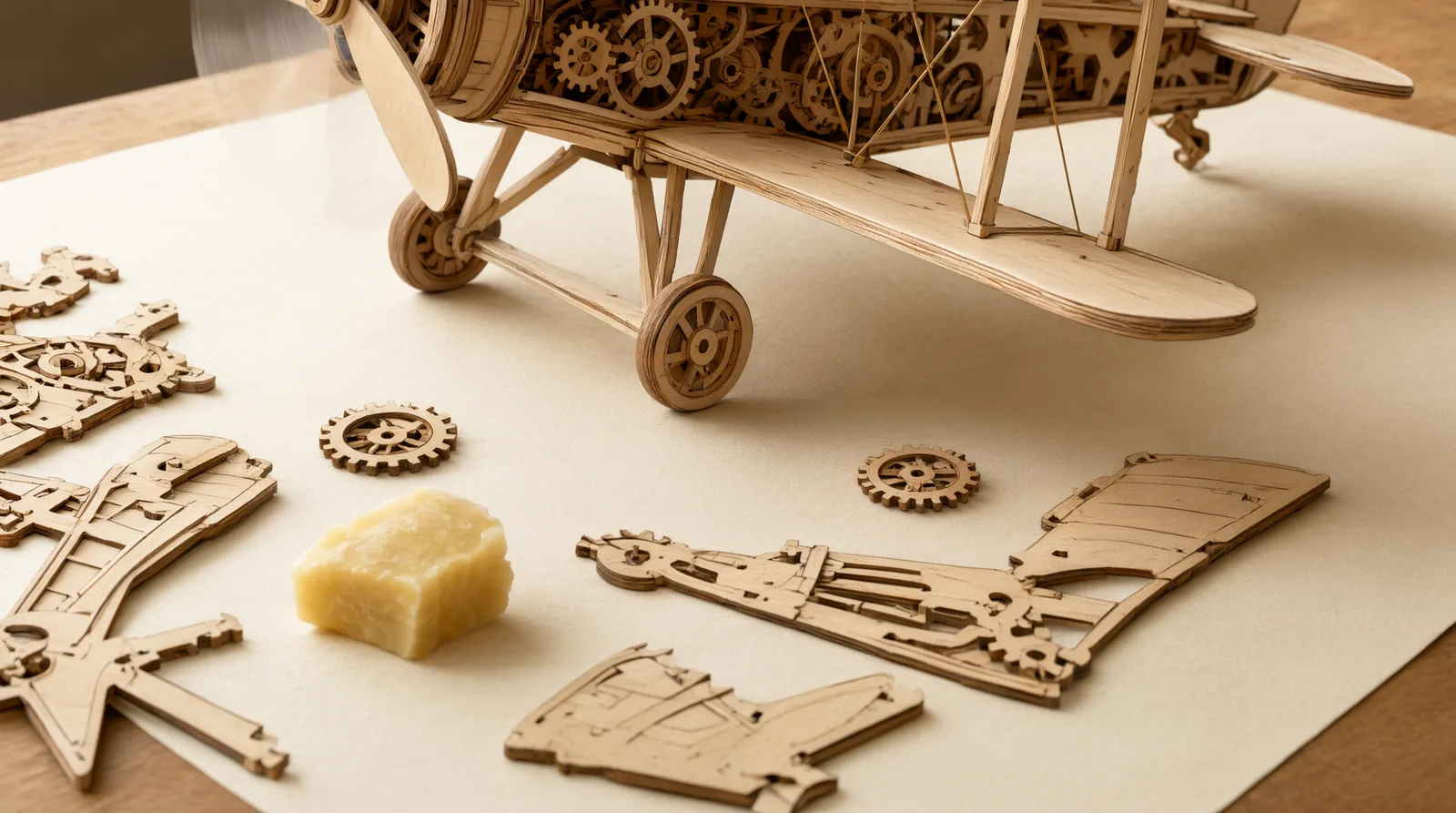
Most model airplane kits promise a satisfying build, but the result is often a static plastic replica that simply sits on a shelf. If you’re looking for a project that moves, interacts, and showcases real mechanical ingenuity, wooden airplane model kits deliver an entirely different experience. At Logicwoody, our wooden biplane puzzle combines vintage charm with a fully functional spinning propeller—offering a build that’s as engaging to assemble as it is to display.
Unlike conventional plastic kits that demand glue, paint, and delicate decals, wooden models rely on precision laser-cut plywood that clicks together without a drop of adhesive. The result is a cleaner, more tactile project that feels less like craft time and more like miniature engineering. As you’ll see, the mechanical payoff alone makes wooden airplane model kits a superior choice for adult hobbyists.
What Plastic Airplane Kits Leave on the Table
Walk through any hobby shop or browse online roundups, and you’ll find plastic airplane kits overwhelmingly dominating the market. The Chicago Tribune’s November 2025 list of the best model airplane kits is a perfect example—filled with snap-together plastic options that produce a finished plane with zero moving parts. Once assembled, the model sits frozen in a single pose, and that’s the end of the interaction.
Those plastic kits often carry hidden hassles. They frequently require a cocktail of glues, solvents, paints, and decal softeners that add mess, cost, and chemical exposure to your workspace. Even after all that effort, the finished piece can be surprisingly fragile—thin plastic propellers snap, landing gear wobbles, and a minor bump can send decals peeling. For a builder who wants more than a dust collector, the static nature of plastic leaves a lot to be desired.
Why Wooden Kits Engage You in a More Rewarding Build
Wooden airplane model kits flip the script by making the assembly itself a lesson in mechanics. Every piece is laser-cut from high-grade plywood, with tabs and slots engineered to fit together snugly without glue. The assembly feels deliberate and satisfying—you’re literally building a working wooden machine.
The magic happens when you install the gears and axles. Unlike a plastic kit where parts are fused permanently, a wooden mechanical model comes alive:
- Propellers spin when you wind up an integrated rubber band or gear drive.
- Wheels turn on landing gear or ground vehicles, inviting play long after the build is done.
- Natural wood grain gives each model a warm, organic character that no paint can replicate. You can appreciate the material honesty—it’s a beautiful object before you even finish the assembly.
Beyond the kinetic reward, wood is a renewable and biodegradable material that feels substantial in your hand. The process closely mirrors the logic of real prototyping: you’re aligning structures, testing friction, and achieving smooth motion. For adult hobbyists who crave screen-free, hands-on projects, that engineering satisfaction is something plastic can’t touch.
Our Top Pick: A Vintage Biplane Puzzle with Spinning Propeller
If you want to experience the best of what wooden kits offer, the Logicwoody wooden biplane puzzle is the place to dive in. This model captures the elegance of early aviation with a double-wing silhouette, detailed wing struts, and an open cockpit—all rendered in richly toned plywood.
The real star, however, is the mechanical propeller. An integrated gear drive (sometimes paired with a rubber-band tensioner) links the propeller to a small winding mechanism. After assembly, you give it a twist, release, and watch the propeller whirl with a satisfying buzz. It’s not just a display piece; it’s an interactive desk sculpture that invites fidgeting and second glances.
And like all Logicwoody models, you need zero paint or glue. Just punch out the numbered wooden sheets, follow the illustrated steps, and click everything together. The finished biplane has a reassuring heft that makes it a joy to handle, and the spinning propeller turns any desk into a tiny airfield.
Beyond the Biplane: Other Wooden Mechanical Models to Explore
The click-fit, moving-part philosophy isn’t limited to aircraft. Logicwoody’s entire catalogue celebrates mechanics in wood. For a taste of complex gear-driven motion, check out the Wooden FS80 Forage Harvester, a farm model that replicates the spinning blades and rotating auger of a real harvester. It’s a perfect example of how wooden kits can mimic heavy machinery with astonishing accuracy.
Every design shares the same core experience—no glue, precision-cut plywood, and a finished piece that does something. Browsing the full 3D Wooden Puzzles collection reveals themes ranging from classic trucks and construction vehicles to nautical ships and even a retro rotary telephone. No matter your interest, you’ll find a build that marries kinetic functionality with timeless wood aesthetics.
Tips for a Flawless Build and Proud Display
While these kits are designed for straightforward assembly, a few simple habits will ensure your wooden model performs beautifully and lasts for years:
- Prepare your workspace. Work on a clean, flat surface and take a moment to organize the wooden sheets before you start. Everything is labeled, so grouping related pieces speeds things up.
- Ease friction points. For smoother gear and axle motion, lightly sand any tight edges with fine-grit sandpaper and apply a tiny bit of beeswax or a dry lubricant. A candle stub works in a pinch.
- Handle small parts with care. Some tiny connectors can be finicky—a pair of tweezers or needle-nose pliers helps seat pieces without forcing them.
- Show off the movement. Once built, place your model where its mechanical action can be appreciated. A desk, shelf, or side table with good ambient light invites interaction. For more ideas on lighting and arrangement, see our Wooden Model Desk Setup guide.
Where to Begin with Wooden Airplane Model Kits
The wooden biplane puzzle is an ideal first step into mechanical model building. It delivers the classic lines of a vintage airplane while giving you a real, working propeller—a payoff that instantly outshines any static plastic equivalent. No prior modeling experience is needed because the numbered, click-together system keeps the process intuitive and frustration-free.
These kits also make exceptional gifts for tinkerers, aviation enthusiasts, or anyone craving a screen-free hobby. Instead of handing over another plastic kit that ends up on a shelf, you’re offering an afternoon of tactile problem-solving and a desk decoration that invites play every day.
Browse our 3D Wooden Puzzles collection to compare designs and find the wooden airplane model kit—or mechanical marvel—that speaks to you. The only thing a plastic kit will give you is something to dust. Choose wood, and you’ll build something that moves.
Ready to trade plastic for plywood? Explore our 3D Wooden Puzzles collection to find the perfect kit—whether you’re drawn to vintage aircraft, farm machinery, or intricate mechanical marvels. Your next screen-free, hands-on project starts here.
Frequently asked questions
Do these wooden airplane model kits require glue or paint?
No. All Logicwoody wooden airplane model kits use precision laser-cut plywood that clicks together without glue or paint. The natural wood grain gives the finished model a warm, finished look right out of the box.
How does the biplane’s propeller spin?
The biplane puzzle uses a simple gear mechanism (sometimes coupled with a rubber band) integrated into the fuselage. After assembly, winding the model builds tension, and when you release it, the propeller spins smoothly—delivering a genuine mechanical payoff.
Are these kits suitable for beginners?
Absolutely. The kits feature numbered pieces and clear step-by-step instructions. No prior model-building experience is needed, making them a great introduction to mechanical wooden puzzles for adults and teens.
How long does the wooden biplane take to build?
Build time varies by skill level, but most adults complete the biplane in 2 to 4 hours. The click-fit design minimizes frustration and lets you focus on enjoying the assembly.
Is the finished model sturdy enough for regular handling?
Yes. The plywood components are durable and the joints stay tight. The moving parts are designed for repeated use, so you can spin the propeller or interact with the model regularly without worry.