
Why Wooden Diorama Puzzle Kits Add Story and Display Appeal
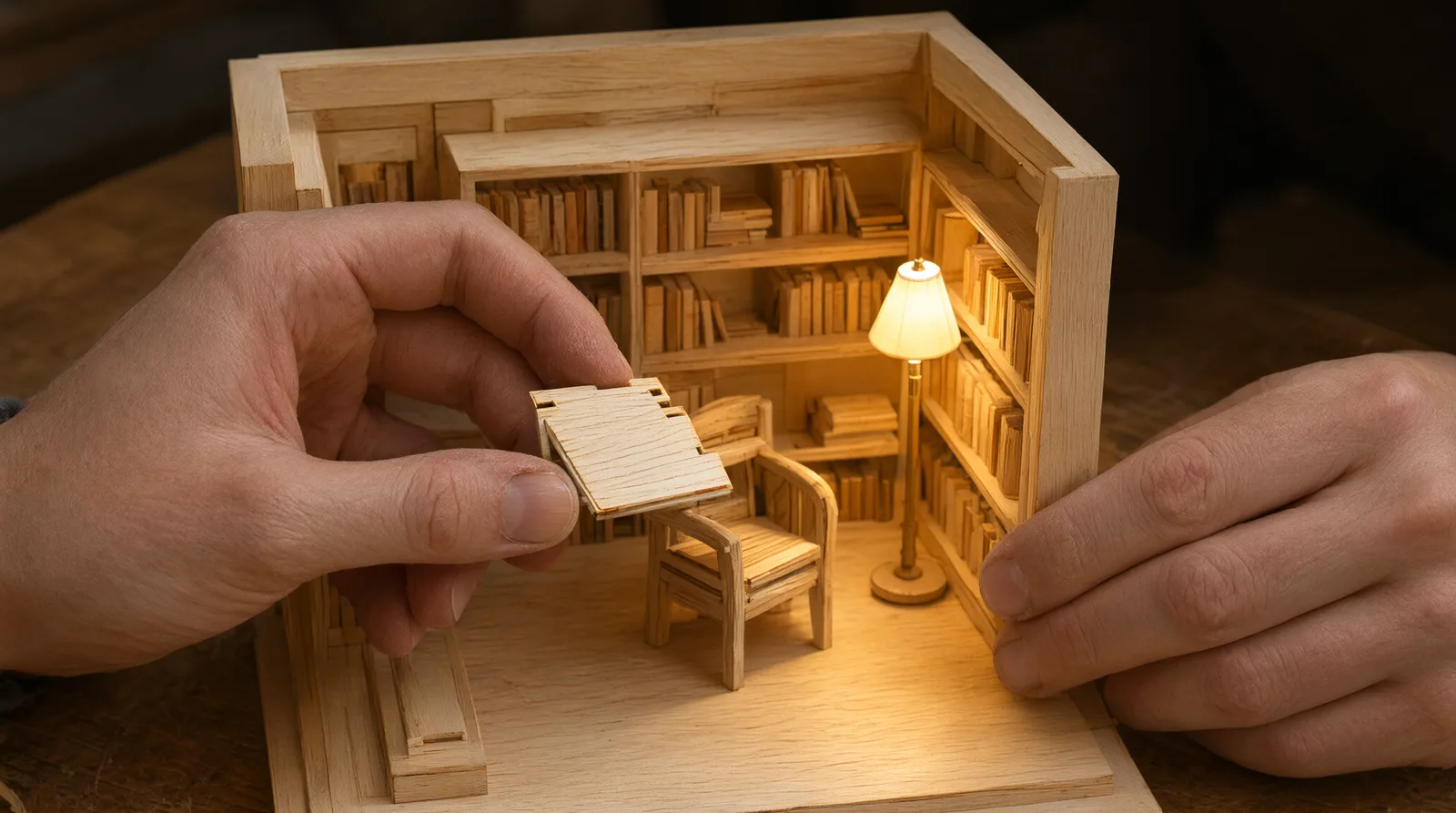
If you love the satisfying click of a wooden puzzle piece locking into place but wish your finished model told a richer story, you are not alone. A new wave of wooden diorama puzzle kit designs is capturing the imagination of builders who want more than a standalone object—they want a miniature world that sparks conversation the moment it’s placed on a shelf.
These hybrid creations blend the hands-on challenge of 3D assembly with the charm of a tiny story scene. And while digital experiments like the Woodo game (featured recently on dlcompare.com) are turning diorama building into a puzzle adventure on screen, physical kits are taking the idea even further—right onto your bookshelf.
What Are Wooden Diorama Puzzle Kits?
A wooden diorama puzzle kit is a precision-cut plywood assembly that creates a miniature scene rather than a single object. Unlike a typical gear-driven model, a diorama puzzle layers backgrounds, tiny props, and environmental details to form a complete setting—like a vintage print shop or a quiet farm field. The result is a self-contained small world that feels as much like decor as it does a puzzle accomplishment.
The concept has gained fresh attention thanks to recent digital diorama titles that turn scene-building into an exploratory puzzle. According to a report on dlcompare.com, the Woodo game lets players rotate and zoom through charming wooden dioramas, piecing together stories as they solve puzzles. Physical kits tap into the same urge: they let you hold that tiny storytelling power in your hands.
Why Storytelling Sets Diorama Puzzles Apart
A standalone vehicle or machine model is satisfying to build, but a diorama invites you to imagine a narrative. Whether it’s a historical moment, a fantastical environment, or a cozy street scene, the act of assembling becomes a process of placing characters and props within a story. This deeper engagement often keeps builders more involved from the first piece to the last.
Once finished, the diorama turns into a conversation piece that draws guests in to ask about the scene, not just the build. That storytelling appeal is bringing a wider audience into the wooden puzzle hobby—interior decor enthusiasts, fantasy collectors, and even people who never considered themselves model builders now see a reason to start.
The Display Appeal: From Shelf to Story Scene
Diorama puzzles are designed with display in mind; their natural form factor sits comfortably on a bookshelf, mantle, or desk without looking out of place. In contrast, many purely mechanical models have moving parts that are fun to operate but may not look at home as decor unless you build a custom base.
Several Logicwoody kits already possess a strong decorative presence. The Wooden Retro Telephone Puzzle, for instance, is a vintage rotary phone that doubles as nostalgic decor on its own. Pair it with a desktop diorama setting—a tiny desk, a notepad, a cup—and you instantly transform a beautiful build into a miniature 1920s office scene. Similarly, the Wooden Printing Machine Puzzle practically begs for a historical print-shop diorama, with ink pads and miniature broadsheets completing the narrative.
How to Add a Diorama Touch to Your Logicwoody Build
You don’t need a kit labeled “diorama” to create a story scene. A few simple techniques can turn any mechanical model into a display-worthy miniature world:
- Use a shadow box or picture frame as a base. Remove the glass and use the frame’s depth to contain a simple background and your model.
- Add texture. Sprinkle static grass, fine gravel, or model railroad ballast on a thin layer of glue to suggest terrain. Printed backdrops taped behind the model add depth without clutter.
- Include tiny props. Match the theme of your model: miniature tools for a garage scene, tiny plants for a garden, or scale figures to suggest a human presence.
A great example is the Wooden FS80 Forage Harvester with JKS 4.5 Header. Mount the finished harvester on a flat plywood base, scatter some model hay bales and static grass, and you have an instant harvest diorama that turns a farm model into a storytelling moment. To find more kits that can be elevated this way, browse the full 3D Wooden Puzzles collection. Even a build like the Cyber Hand could sit on a robotic-lab themed base with cable greebles and a tiny workstation.
Choosing a Kit That Balances Ingenuity and Display Value
Pure mechanical puzzles deliver gear-driven fun, while pure diorama kits lean heavily into visual narrative. Many builders find that the sweet spot lies in kits that offer satisfying mechanics but can be expanded with a simple display base. That way you don’t lose the tactile joy of interlocking wooden gears, yet you still end up with a piece that compels people to lean in and ask about the story.
Logicwoody’s mechanical kits already give you that build satisfaction. Adding a DIY diorama context—like a farm field for the harvester or a vintage office for the telephone—injects storytelling without sacrificing the core puzzle experience. Start exploring the 3D Wooden Puzzles collection for a model that speaks to you, and consider how a small scene could bring it to life. As the diorama trend grows, you may find yourself ahead of the curve, showing off a collection that’s equal parts engineering and art.
Ready to give your next build a narrative twist? Explore the full 3D Wooden Puzzles collection and pick a kit that’s just waiting for its own tiny story.
Frequently asked questions
What exactly is a wooden diorama puzzle kit?
A wooden diorama puzzle kit is a laser-cut plywood assembly that builds a miniature scene—like a room, landscape, or historical moment—rather than a standalone object. It combines the puzzle challenge with artistic display, often including layered backgrounds and tiny props. The finished piece is a self-contained small world that invites storytelling.
How do wooden diorama puzzles differ from mechanical 3D puzzles?
Mechanical 3D puzzles typically focus on moving parts like gears and levers, creating a functional model. Diorama puzzles emphasize scene-building and visual narrative, often with less mechanical action. However, many builders blend both approaches by adding a diorama base to a mechanical kit.
Can I turn an existing Logicwoody model into a diorama?
Absolutely. Simple DIY techniques like using a shadow box frame, adding miniature grass or gravel, and printing a backdrop can transform a mechanical model into a story scene. For example, the FS80 Forage Harvester can be placed on a farm-field base to create a harvest diorama.
Are these kits suitable for beginners?
Most wooden puzzle kits, including those that lend themselves to dioramas, are suitable for hobbyists with basic model-building skills. The assembly process is guided by numbered pieces and clear instructions. Adding a diorama base requires only simple crafting tools and materials.
Where can I find wooden puzzle kits that work well as dioramas?
The Logicwoody 3D Wooden Puzzles collection offers many kits with strong display potential. Even models designed as mechanical puzzles, like the Retro Telephone or Printing Machine, easily become decorative dioramas with a little creativity.