
Diecast Custom Truck Fan? Build a Wooden Heavy Truck Model Kit
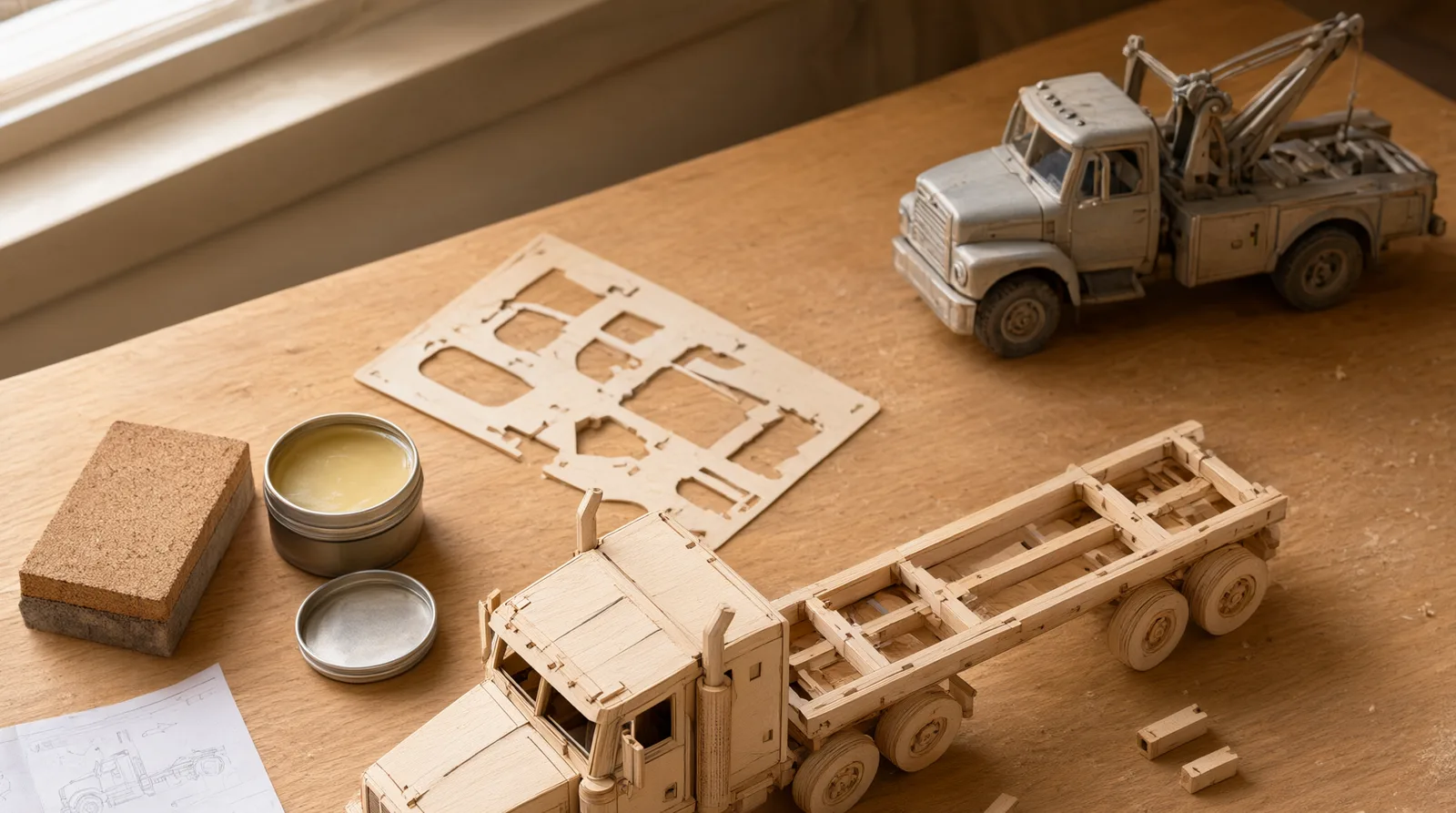
If you've recently fallen down the YouTube rabbit hole of custom diecast heavy wreckers, you're in good company. Watching a meticulous builder transform a basic Matchbox into a patina-laden Freightliner wrecker is oddly satisfying—but it can also plant a restless question. What if you could move beyond watching and build your own heavy-duty rig from the ground up? A wooden heavy truck model kit offers exactly that: a tactile, mechanic-forward project that puts you in the driver's seat of every gear, axle, and joint.
Why Custom Diecast Wreckers Are Captivating Collectors Right Now
There's a reason the custom diecast community can't get enough of trucks like the 1979 Freightliner cab-over. The classic boxy silhouette, the rugged wrecker bed outfitted with booms and chains, and the artisan touches—custom paint, weather-worn patina, handmade decals—turn a mass-produced toy into a one-of-a-kind miniature. A recent custom 1979 Freightliner cab-over wrecker build on YouTube shows the level of detail that gets model truck fans talking, from retooled rear bodies to miniature hydraulic pistons.
Part of the thrill comes from sharing the process: step-by-step videos, in-progress photos, and the camaraderie of builders trading tips on how to simulate a rusted headache rack or scratch-build a fifth wheel. Yet for many enthusiasts, watching isn't quite enough. Admiring a finished custom diecast sparks a desire to create something with your own hands—to own not just the final product, but the entire journey of its construction. This is where the industrial aesthetic of heavy trucks takes on a new, more personal dimension.
From Pre-Built to Self-Built: The Satisfaction of a Wooden Heavy Truck Model Kit
Buying a pre-assembled diecast is a quick hit of joy—a matter of unboxing and placement. Assembling a wooden heavy truck model kit rewrites that experience entirely. With a kit like the Wooden Tractor Unit and Container Chassis Set, you start with flat sheets of laser-cut birch plywood and, piece by piece, grow a recognizable long-haul semi from a stack of wooden stroked. You'll understand the cab-over profile, the chassis rail spacing, and the relationship between the fifth wheel and trailer—knowledge that no static collectible can convey.
Beyond the structural insight, these kits bring heavy machinery to life through the mechanics you assemble yourself. Steering linkages turn the front wheels, rotating drums and winch spools operate under your fingertips, and dump beds tilt with a push of a lever. That functional depth is something no pre-built diecast replica can offer. The result is a display model that tells a story: every joint, every moving part, and every gear you placed by hand is a chapter of your own build.
Essential Features to Look for in a Wooden Heavy Truck Model Kit
Not all kits are created equal. Before you choose your next project, scanning for a few key features will make the difference between a frustrating afternoon and a rewarding build.
- Scale and dimensions. Match the model's footprint to your shelf space. A detailed semi with trailer may demand more display room, while a compact dump truck fits neatly on a desk.
- Interactive mechanicals. Seek out kits with working steering axles, rotating drums, articulating joints, or functional dump beds. Models like the Wooden FS80 Forage Harvester show how even agricultural machines deliver rich mechanical motion.
- Material quality. High-grade laser-cut birch plywood ensures precise fits and minimal splintering. Most good kits require no glue, relying on friction-fit pegs that hold securely.
- Complexity level. A moderate part count suits those new to wooden puzzles, while the Ferdinand or MoAZ series challenges experienced builders with hundreds of intricate components.
- Instruction clarity. Step-by-step illustrated guidance is non-negotiable. Look for diagrams that map every piece, ideally with a numbered parts list and clear assembly order.
You can compare all these options on the 3D Wooden Puzzles collection page, where you'll find everything from straightforward farm trucks to complex mining machinery.
Building Your Own Miniature Heavy-Duty Rig: Tips for a Flawless Build
A few simple habits turn a delicate assembly into a smooth, frustration-free project. Start with a clean, well-lit work surface—a cutting mat and small trays keep parts from wandering and protect your table.
Always test-fit joints before pressing them fully home. If a peg feels too snug, a light sanding with the included fine-grit paper solves the issue without weakening the connection. For moving parts like axles, gears, and turntables, rub a small amount of dry wax lubricant (a plain candle stub works perfectly) on the contacting surfaces. This ensures smooth, consistent motion long after the build is complete.
If you're tempted to customize your rig with a paint scheme inspired by your favorite diecast custom, use water-based acrylics or wood stains. Seal the finish with a matte varnish to protect the wood without making it look plastic. Most importantly, pace yourself—read a few steps ahead, and treat the process like a slow, mindful hobby rather than a race. Rushing often leads to snapped tabs, especially in the intricate mechanical assemblies that make these kits so rewarding.
From Screen to Workbench: How Wooden Kits Offer a Screen-Free Hobby
It's an interesting twist: we discover custom diecast builds through video, but the actual act of building a wooden model turns off the screen and demands focus. Pop-clicking parts out of a plywood sheet, identifying a tiny gear, and testing a steering mechanism draws you into a tactile, offline zone. There are no notifications, no background chatter—just the grain of the wood and the quiet satisfaction of joining two pieces.
This hands-on rhythm can become meditative. The repetitive, deliberate motions help you enter a flow state that's hard to find in digital hobbies, and the sense of accomplishment after a two-hour session is tangible. There's also an environmental bonus: renewable birch plywood, minimal plastic packaging, and zero batteries make these kits a small, sustainable win over mass-produced diecast and their blister packs. Whether you build solo or share the workbench with a family member, a wooden truck model fosters mindfulness and the simple joy of making.
Where to Start: Our Favorite Wooden Heavy Truck Model Kits
The Logicwoody lineup includes several standout rigs that capture the heavy-duty spirit diecast fans love. The Wooden Tractor Unit and Container Chassis Set nails the classic long-haul semi silhouette, complete with a detachable trailer that gives you a full big-rig presence on your shelf. For a different look, the Wooden Tractor Unit and Tanker Semi Trailer Set swaps the container for a bulk tanker trailer—its rounded volume adds visual weight and variety.
If you lean toward armored, rugged vehicles, the Wooden Ferdinand Puzzle (a classic heavy vehicle) blends historical character with a densely layered assembly experience. Mining and construction fans will gravitate toward the Wooden MoAZ 75053 Earthmoving Dump Truck, a massive off-road monster with moving parts, or the articulated Wooden MoAZ 4075 Load Haul Dump Machine, whose unique pivoting frame is as entertaining to operate as it is to build. Each model lets you channel that custom diecast energy into something you truly built with your own two hands.
Ready to turn inspiration into a tangible project? Explore the full selection of heavy-duty and mechanical builds at the 3D Wooden Puzzles collection and start your first wooden rig today.
Frequently asked questions
Do these wooden truck kits require glue?
No, most Logicwoody kits are designed with friction-fit pegs that lock precisely without glue. The laser-cut birch plywood pieces snap together securely, though you may occasionally sand a tight joint for a smoother fit.
Are the moving parts actually functional?
Yes. Many models include mechanical functions you assemble and operate, such as steering axles, rotating dump beds, winches, and articulated frames. These aren't static decorations—they move just like their real-world counterparts.
What tools will I need?
The kit includes everything you need, from the wooden sheets to sandpaper. A craft knife or gentle sanding tool can help with stubborn tabs, and a small candle stub or dry wax lubricant is recommended for smoothing gear and axle motion.
Are these kits suitable for beginners?
Absolutely. Start with a model that has a moderate part count and clear, illustrated instructions. The Tractor Unit sets are beginner-friendly, while the Ferdinand or MoAZ machines challenge experienced builders with hundreds of pieces.
Can I paint or customize the wood?
Yes. Water-based acrylic paints and wood stains work well on birch plywood. If you want to replicate a custom diecast paint scheme, seal your work with a matte varnish to protect the finish and keep the wood texture intact.