
Wooden Military Model Kits: Build & Display Heavy Vehicle Puzzles
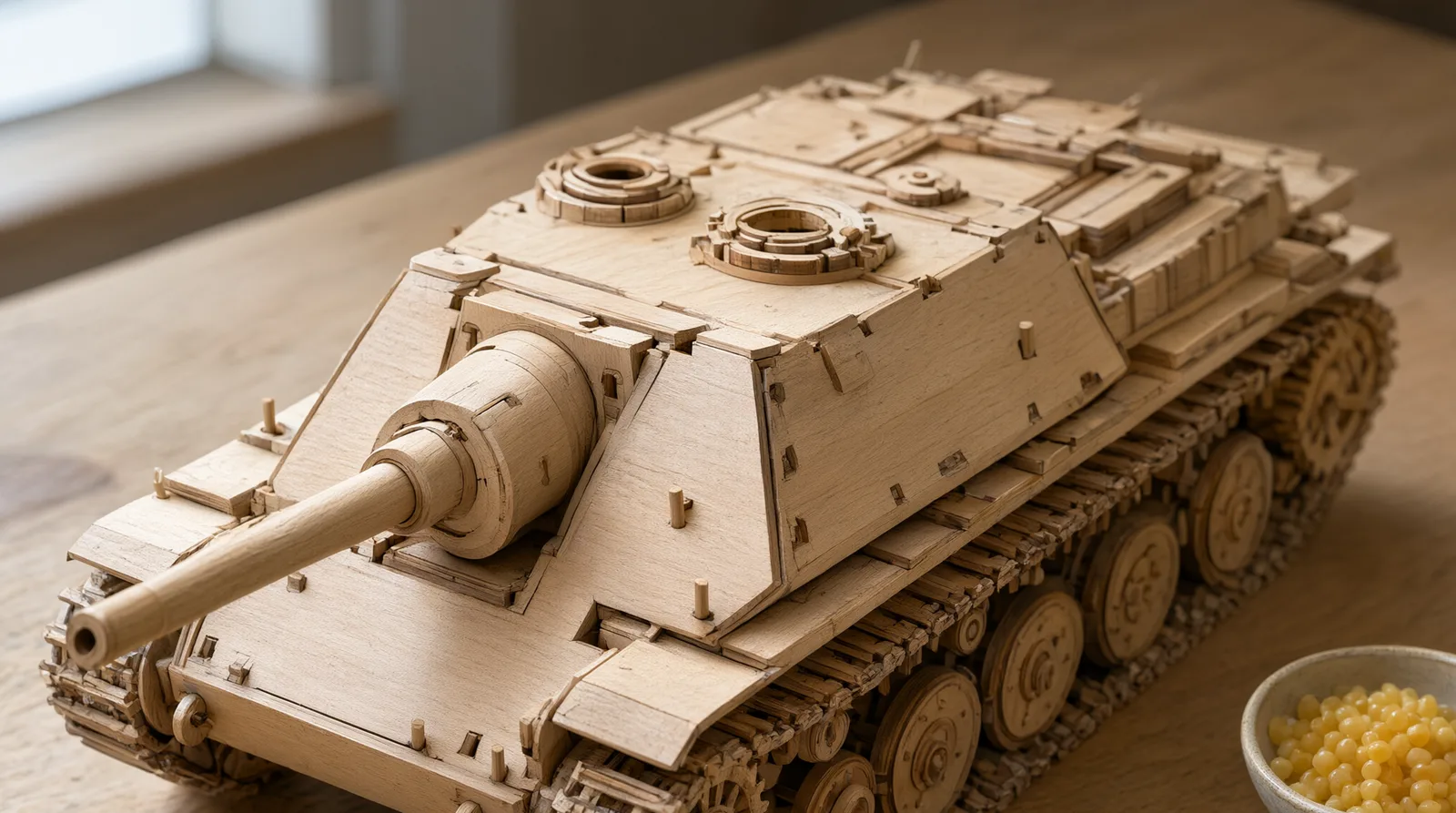
If you've spent years assembling plastic military vehicle kits, the routine is familiar: cutting sprues, breathing in chemical adhesives, and carefully painting each part. But a quiet shift is drawing more builders toward wooden military model kits that offer a completely different kind of satisfaction. These mechanical puzzles replace solvents with natural friction fits and let the warm grain of the wood become the finish.
When the final piece clicks into place, you get a robust, display-ready model that feels substantial in your hands. Whether you're fascinated by historic armored vehicles or modern logistics rigs, a wooden kit invites you to slow down, engage with the engineering, and create something that looks more like functional art than a mass-produced miniature.
Why the Military Vehicle Modeling World is Shifting to Wood
Interest in heavy military vehicles remains strong, and it's not limited to diecast collectors. A recent Bdaily report highlighted a military vehicle venture gearing up for expansion, showing that appreciation for these machines continues to grow. Yet many modelers are rethinking the materials they use at their bench.
Plastic kits carry well-known downsides: solvent fumes, fragile assembly, and an environmental footprint that can feel at odds with a mindful hobby. Wooden mechanical puzzles sidestep those problems entirely. You get to work with a renewable material that smells pleasant, requires no toxic glue or paint, and produces less non-biodegradable waste. The process itself becomes meditative—pressing wooden dowels into laser-cut plywood pieces, watching a heavy chassis take shape, and feeling the deliberate motion of a gear train.
Beyond the build, wood's natural texture gives a finished model a presence that painted plastic rarely matches. Even an unpainted Ferdinand tank destroyer puzzle carries the subtle color variations of birch or basswood, so the finished piece looks like an heirloom rather than a factory toy.
Spotlight on Logicwoody's Wooden Military Model Kits
For military vehicle enthusiasts, the Wooden Ferdinand Puzzle is a natural starting point. This classic heavy vehicle mechanical assembly captures the distinctive layout of the Panzerjäger Tiger (P) Ferdinand, with its thick casemate armor and boxy silhouette. As you snap the interlocking panels together and fit the working suspension, you begin to appreciate the real vehicle's weight distribution and purpose-built engineering in a way a static resin kit can't convey.
But military modeling isn't only about fighting vehicles. Support and logistics machines are just as essential. Kits like the Wooden Tractor Unit and Container Chassis Set or the MoAZ 75053 dump truck let you build the backbone of a field operation. Pairing these with your armored models creates a thoughtful collection that tells a broader story—right on your shelf.
All Logicwoody kits come as precisely laser-cut plywood sheets. You need no glue, no paint, and no special chemicals to complete them. Just pop out the parts, follow the illustrated instructions, and enjoy the clean assembly. If you want to see the full range, browse the 3D Wooden Puzzles collection.
Building Your Wooden Military Model: Tools and Techniques
A little preparation goes a long way. Start with a dedicated workspace covered in a soft mat or a large sheet of paper. This catches any tiny wooden burrs that fall out during assembly and makes it easy to gather up parts if they slip. Keep a small bowl nearby to hold loose pins and axles until you need them.
Dry-fit every joint before you fully seat a dowel. The friction tolerances are tight, and a test fit confirms you have the right piece in the right orientation. If a part feels overly snug, gently rub the edge with fine-grit sandpaper (400 grit or higher) to ease the fit without removing too much material. Always sand lightly—wood removes quickly.
For moving parts like gear trains, suspension arms, or steering linkages, a tiny amount of beeswax works wonders. Rub a birthday candle or a dedicated beeswax stick onto the contact surfaces before final assembly. This gives smooth, silent motion without the risk of staining the wood, which liquid lubricants can cause. Avoid any oil-based product on raw wood.
Perhaps the most important technique is simply pacing yourself. Unlike plastic models where you might assembly-line an entire sprue, a wooden mechanical puzzle rewards a slower, almost ritualistic approach. Spend an evening on the chassis, another on the running gear, and savor how the flat sheets transform into a three-dimensional vehicle that moves.
Display Ideas That Command Attention
Because wooden models carry their own finish, they shine when the display setting contrasts with the natural material. A simple diorama base made from a dark-stained wood plaque, with a sprinkle of coarse sand and a clump of dried sphagnum moss, grounds a military vehicle without overpowering it. The organic textures make the wooden puzzle feel like a scale prototype rather than a toy.
Lighting is your ally. Position a small LED spotlight at a 45-degree angle to the model. The directional light will rake across the surface grain and cast deep shadows into the mechanical cutouts and gear cavities. This highlighting brings out details that flat overhead lighting hides, and it makes the model look alive on a shelf.
Rotate your display every few weeks. Wooden models are designed to be appreciated from multiple angles—some with interior gear works visible through windows, others with articulated suspensions that beg to be set in a turning pose. A periodic rotation also prevents any single point from collecting dust or fading unevenly, though the wood's natural color is quite stable indoors.
If you build the Wooden Ferdinand, consider flanking it with a Wooden Tractor Unit and Tanker Semi Trailer Set to simulate a refueling scene. Stacking a few support vehicles from the store's lineup tells a complete story, and guests will often spend more time examining the mechanical detail than they would on a perfectly painted plastic diorama.
Ready to trade chemical fumes for the scent of fresh-cut wood? Explore all the heavy vehicle puzzles in the 3D Wooden Puzzles collection and find the military or support model that sparks your next build.
Frequently asked questions
What tools do I need to assemble a wooden military model kit?
You typically need only fine-grit sandpaper (400 grit or higher) and a small amount of beeswax or a plain candle. The kits include all structural parts and require no glue, solvents, or paint.
Are these kits suitable for beginners?
Yes, the visual step-by-step instructions make them approachable. If you're new, a simpler support vehicle helps you learn the fitting techniques, but even a heavy kit like the Ferdinand is manageable with patience.
Can I paint my wooden model?
You can, but most builders leave the wood natural because the grain looks great. If you do paint, use water-based acrylics in thin coats to prevent warping, and test on scrap plywood first.
How long does a build take?
A typical heavy vehicle puzzle takes between 6 and 12 hours. Many builders enjoy spreading the work over several evenings to savor the transformation.
Do the moving parts wear out over time?
With occasional application of beeswax, the moving joints remain smooth and durable. Wooden mechanical puzzles, when properly assembled, can last for many years without noticeable wear.